
If you’ve ever stood at the edge of your property, looking out at overgrown brush, tangled underbrush, and invasive vegetation thinking “where do I even start?”—you’re not alone. Landowners across Missouri face this exact challenge every single day.
The good news? There’s a better way to reclaim your land than the old-school methods of chainsaws, burn piles, and hauling off debris. It’s called forestry mulching, and it’s changing the game for property owners throughout Farmington, MO, St. Francois County, and the surrounding areas.
What Exactly Is Forestry Mulching?
Forestry mulching is a land clearing method that uses specialized equipment to cut, grind, and spread vegetation in a single pass. Unlike traditional clearing that leaves you with piles of debris, burn restrictions to navigate, and bare soil vulnerable to erosion, forestry mulching transforms unwanted trees, brush, and stumps into a natural layer of mulch right where it falls.
Think of it as nature’s recycling program on steroids. That tangled mess of Eastern Red Cedar (Juniperus virginiana), Honey Locust (Gleditsia triacanthos), and aggressive Multiflora Rose (Rosa multiflora) gets processed into beneficial ground cover that actually helps your land heal and thrive.
The equipment we use—typically a skid steer or tracked carrier with a mulching head attachment—can handle everything from small saplings to trees up to 8 inches in diameter or more, depending on the machine and conditions.
Why Missouri Landowners Are Choosing Forestry Mulching?
It Works With Our Soil, Not Against It
Here in St. Francois County and the surrounding Ozark region, we deal with some unique soil conditions. The combination of clay-heavy soils, rocky outcroppings, and areas of thin topsoil means traditional land clearing methods can cause serious problems.
When you bring in heavy dozers for conventional clearing, you’re looking at compacted soil that won’t drain properly, displaced topsoil that took centuries to develop, and erosion issues that can take years to correct. The rocky terrain common around Farmington makes this even more challenging.
Forestry mulching keeps the root systems in place, which helps stabilize the soil. The mulch layer protects against erosion during our heavy spring rains and helps retain moisture during those brutal August dry spells. For property owners trying to improve their land’s value and usability, this matters a lot.
One Machine, One Pass, Done
Traditional land clearing is a multi-step nightmare. You’ve got the cutting crew, the hauling crew, the burning (when it’s even allowed), and then dealing with the stumps. Each step costs time and money.
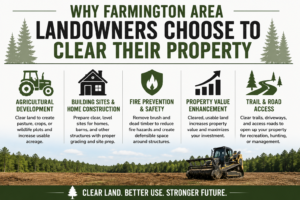
With forestry mulching, a single piece of equipment handles everything. That overgrown fence line that’s been bugging you for years? We can knock it out in a day. That back forty you’ve been wanting to turn into pasture? A few days of mulching and you’re ready for the next phase.
This efficiency translates directly to cost savings for farm owners and rural property owners who need to stretch their land management budgets.
Common Applications for Forestry Mulching
Pasture Reclamation and Expansion
If you’re running cattle or horses, you know how quickly good pasture can turn into a brushy mess. Cedar trees are notorious for creeping into Missouri pastures, and once they get established, they spread fast. Species like Osage Orange (Maclura pomifera) and Black Locust (Robinia pseudoacacia) can turn productive grazing land into an unusable thicket within a few years.
Forestry mulching lets you reclaim that land without the disruption of traditional clearing. The mulch layer actually benefits your soil as it breaks down, adding organic matter and improving the structure of those heavy clay soils.
Right-of-Way and Fence Line Maintenance
Every farm owner knows the endless battle of keeping fence lines clear. Vegetation grows into fencing, trees fall across boundary lines, and suddenly a simple fence repair becomes a major project.
Regular forestry mulching along fence lines and rights-of-way keeps things manageable. It’s also essential for maintaining access roads and fire breaks on larger properties.
Wildlife Habitat Improvement
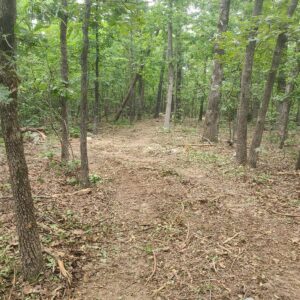
Here’s something that surprises a lot of landowners: forestry mulching can actually improve wildlife habitat when done strategically. Selective mulching creates edge habitat that deer, turkey, and quail absolutely love. It opens up the forest floor, encouraging native grasses and forbs to establish.
We’re not talking about clear-cutting everything in sight. Smart land management means keeping desirable species like White Oak (Quercus alba) and Shagbark Hickory (Carya ovata) while removing the invasive stuff that’s choking them out.
Site Preparation for Construction and Excavation
Planning to build a barn, shop, or home site? Forestry mulching is the perfect first step before excavation work begins. It removes vegetation quickly and leaves the site ready for grading and foundation work without the mess and expense of hauling off debris.
The mulch can even be pushed into piles and used elsewhere on your property for landscaping or erosion control.
Forestry Mulching vs. Traditional Land Clearing Methods
Let’s break down how forestry mulching stacks up against the old ways of doing things:
Bulldozing and Grubbing
Effective but destructive. Bulldozers scrape away topsoil, damage root systems of trees you want to keep, and leave massive piles of debris. The soil compaction alone can set your land back years.
Cut and Haul
Labor intensive and expensive. You’re paying for cutting, then paying again for hauling, and probably paying a third time for disposal. Plus, you still have stumps to deal with.
Controlled Burns
Increasingly restricted and weather-dependent. Burn bans are becoming more common, and one shift in wind direction can turn a controlled burn into a disaster.
Forestry Mulching
Single-pass efficiency, minimal soil disturbance, no debris to haul, and a beneficial mulch layer left behind. It’s not always the right choice for every situation, but for most land clearing needs in our area, it’s the smart move.

What to Expect During a Forestry Mulching Project
Every project starts with a site visit. We need to see what we’re dealing with—the terrain, the vegetation types, access points, and any obstacles or areas you want protected.
From there, we’ll provide a clear estimate based on acreage and conditions. Pricing typically runs by the acre or by the hour, depending on the project specifics.
The actual mulching work is surprisingly fast. Depending on vegetation density, we can typically process one to three acres per day. You’ll see the difference immediately—what was an impenetrable thicket in the morning is open, accessible land by afternoon.
FAQ: Do I Need a Permit for Forestry Mulching on My Own Property?
This is one of the most common questions we get, and the answer is: it depends, but usually no.
In most cases, forestry mulching on your own private property in Missouri doesn’t require a permit. You’re not removing trees from the land—you’re simply converting standing vegetation into ground-level mulch. There’s no burning involved, so you don’t need burn permits.
However, there are exceptions to be aware of:
- Wetland areas: If any portion of your property includes wetlands, you’ll need to check with the Army Corps of Engineers before clearing.
- Stream buffers: Missouri has guidelines about clearing vegetation near streams and waterways.
- Subdivision restrictions: Some developments have covenants about tree removal.
- Threatened species habitat: Rare, but worth checking if you’re in a sensitive area.
When in doubt, a quick call to your county planning office can save headaches down the road. We’re also happy to point you in the right direction during our initial consultation.
Ready to Transform Your Property?
Whether you’re a farm owner looking to reclaim overgrown pasture, a property owner preparing a building site, or someone who simply wants their land to be usable again, forestry mulching offers an efficient, environmentally sound solution.
At JND Forestry, we’ve helped landowners throughout Farmington, MO, St. Francois County, and the surrounding areas take control of their property through professional forestry mulching, land clearing, and excavation services. We understand the local terrain, the local vegetation, and the unique challenges Missouri landowners face.
Ready to get started? Give us a call or visit jndforestryservices.com to schedule your free property consultation. Let’s walk your land together and put together a plan that makes sense for your goals and your budget.
Your property has potential. Let’s unlock it.